
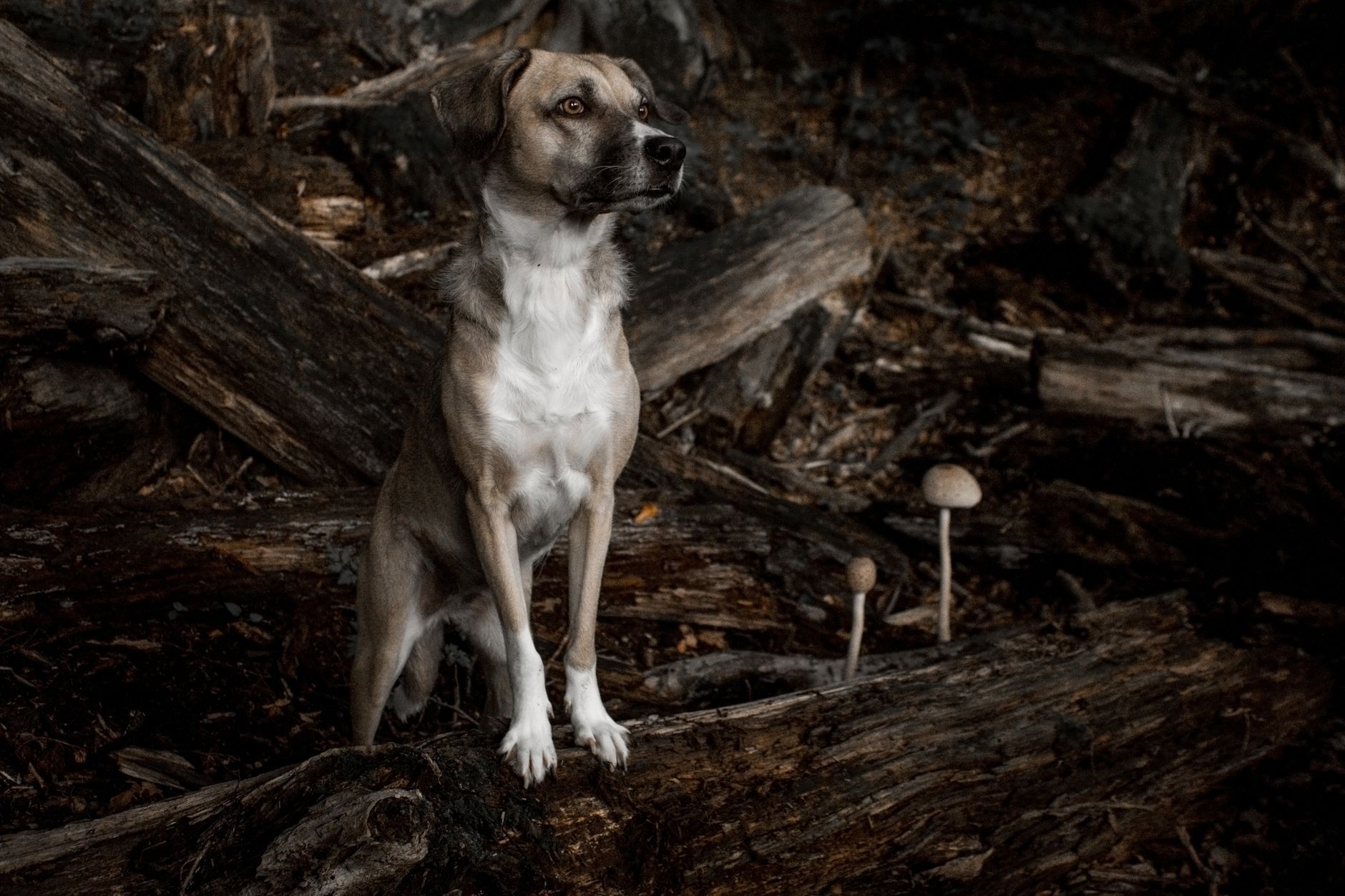
Most garden mushrooms are harmless, but a small number growing in Vancouver are severely toxic to dogs, and they cannot be told apart by appearance. Treat any mushroom your dog eats as potentially serious. Photograph it, collect a sample if you safely can, and phone your veterinary team straight away rather than waiting for signs.
Why they appear overnight in September
Mushrooms are the fruiting body of a fungus that has been living in the soil or in dead wood all year. They appear when conditions are right, and the west side of Vancouver delivers those conditions almost to a schedule: the September rain returns, the ground stays warm from summer, and the mushrooms come up within days.
What surprises owners is the speed. A lawn that was clear on Friday can have thirty mushrooms on Monday. There is no gradual arrival to notice, which is why the autumn check of your own garden needs to be a habit rather than a one-off.
Dunbar makes this more relevant than most neighbourhoods. The mature trees, the lawns, the bark mulch in the front gardens, and the wooded ground of the parks on the west side are all excellent fungal habitat. Mulched beds and rotting stumps are particularly productive.
The honest truth about identification
We want to be very direct here, because this is where dogs get into trouble.
You cannot reliably tell a safe mushroom from a dangerous one by looking at it, and neither can we. Several of the most toxic species in this region are plain, white or pale brown, and unremarkable. Some closely resemble species people happily eat. Colour, smell, whether slugs have eaten it, and whether it grows in a ring all tell you nothing useful about safety.
Phone apps and internet image searches are not reliable enough to make a decision on when a dog’s health depends on it. Experienced foragers will not identify a specimen from a photograph either.
The practical consequence is simple: the response to a dog eating any mushroom is the same as if it were a dangerous one, until enough time has passed to be confident.
What toxic mushrooms actually do
Different species affect different systems, and the timing varies enormously.
- Stomach and gut signs, usually starting within fifteen minutes to a few hours. Vomiting, drooling, diarrhea, belly discomfort.
- Neurological signs, often quick. Wobbliness, tremors, disorientation, agitation, dilated pupils, seizures.
- Liver injury, and this is the group that concerns us most. The dangerous feature is a delay. A dog can eat the mushroom, vomit for a few hours, then appear to recover completely for a day or more before serious liver damage becomes apparent.
- Kidney injury, which can also be delayed by days.
That false recovery is the single most important thing in this article. Owners quite reasonably conclude the danger has passed because the dog is bright, eating and behaving normally. In the species that damage the liver, that window is part of the pattern rather than a sign of safety.
This is why we would rather assess a dog who turns out to have eaten something harmless than see one on day three.
What to do if your dog eats a mushroom
- Phone us immediately. Do not wait to see whether anything happens.
- Photograph the mushroom before you move it, ideally showing the cap from above, the underside with the gills, and the full stem including the base.
- Collect a sample if you can do so safely. Dig the whole thing up including the base, wrap it in damp kitchen paper, and put it in a paper bag rather than plastic. The base carries features that matter for identification.
- Note where it was growing, in grass, in mulch, on a stump, or under a particular kind of tree.
- Note the time and roughly how much was eaten.
- Do not try to make your dog vomit at home. Whether that is appropriate depends on timing and on your dog, and doing it wrongly causes real harm. Let us make that call.
- Bring your dog in to our urgent care if we advise it, and bring the sample with you.
Signs that mean come in now
- Vomiting or diarrhea after any time outdoors unsupervised in autumn
- Drooling, or repeated lip licking and swallowing
- Wobbliness, stumbling, or an unsteady head
- Tremors, twitching or seizure activity
- Disorientation, staring, or unusual agitation
- Sudden lethargy or weakness
- Yellowing of the gums or the whites of the eyes, which can appear a day or more later
- Any dog you know ate a mushroom, whether or not they seem unwell
If your dog arrives having eaten something unidentified, our diagnostics give us a baseline on liver and kidney function and let us repeat it over the following days, which is how the delayed pattern gets caught before it becomes advanced.
Reducing the chance in the first place
- Walk your garden in the morning through the autumn and pick anything that has come up. It takes a minute.
- Wear gloves and remove the whole mushroom, base included, then bin it rather than composting it.
- Pay attention to bark mulch and old stumps, which produce reliably and repeatedly.
- Keep dogs on lead in wooded areas during the wettest weeks, particularly dogs who put everything in their mouths.
- Watch the ground on walks rather than your phone, especially along verges and under mature trees.
- Teach a solid leave command and practise it before you need it in a hurry.
- Consider a basket muzzle for a committed scavenger. It is a kind tool that lets a dog walk more freely, not less.
Mushrooms are one item on a longer list of things that grow around a Vancouver home and are not good for pets. Our guide to houseplants that could harm your pet covers the indoor half of the same problem, which becomes more relevant as everyone brings plants back inside for the winter.
What about cats?
Cats eat mushrooms far less often, because they are more selective and less inclined to eat something off the ground. It does happen, though, particularly with young cats and with indoor cats investigating mushrooms that have appeared in the soil of a houseplant.
The advice is identical. Photograph it, keep a sample, and phone rather than watch. Cats also hide early signs of illness well, so the absence of obvious signs is worth even less in a cat than in a dog.
Frequently asked questions
My dog ate a mushroom two hours ago and is completely fine. Do I still need to call?
Yes. Feeling fine at two hours does not rule out the species that damage the liver, because those often produce a period of apparent normality before serious signs appear. A phone call takes a few minutes and lets us decide together whether anything more is needed.
Are the mushrooms in my lawn different from the ones in the woods?
Both can include toxic species, so the distinction is not useful for safety. Lawn and mulch mushrooms matter more in practice simply because dogs spend unsupervised time in gardens, while walks are usually supervised.
Can I identify it from a photo I send you?
We would rather you send it than not, because occasionally a photograph is genuinely informative and it always helps us understand what we are dealing with. But please do not treat a photograph as a reason to stay home. Identification from images is unreliable even for specialists, so the decision to be seen should not rest on it.
Is it safe if my dog only chewed it and spat it out?
Possibly, but not certainly, because it is very hard to know how much was swallowed. Phone us and describe what happened. In many cases the answer will be to monitor at home with specific things to watch for, which is a much better position than guessing.
How long do I need to watch for?
We will give you a timeframe based on what was eaten and when, and it is frequently longer than owners expect because of the delayed liver pattern. Do not treat the first twenty four hours passing without incident as the end of it unless we have told you that.
Should I stop walking my dog in the woods in autumn?
No. Autumn is one of the better times of year to walk a dog in Vancouver. Keep a scavenging dog on lead through the wettest weeks, watch the ground, practise a leave command, and check your own garden regularly. That handles most of the risk without giving up the season.
Speak to the team at Alta Vista Animal Hospital
If your dog has eaten a mushroom, phone us straight away and bring a photograph or a sample.
Published by the team at Alta Vista Animal Hospital.
This article is for general educational purposes only and is not a substitute for an in-person veterinary examination or advice about your individual pet. If you have an urgent concern about your pet, contact Alta Vista Animal Hospital or your nearest emergency veterinary hospital right away.
Alta Vista Animal Hospital
4543 Dunbar St, Vancouver, BC V6S 2G7
Phone: (604) 221-5858
Hours: Monday to Friday 8:00 AM to 7:00 PM; Saturday 8:00 AM to 6:00 PM; Sunday 9:00 AM to 5:00 PM