
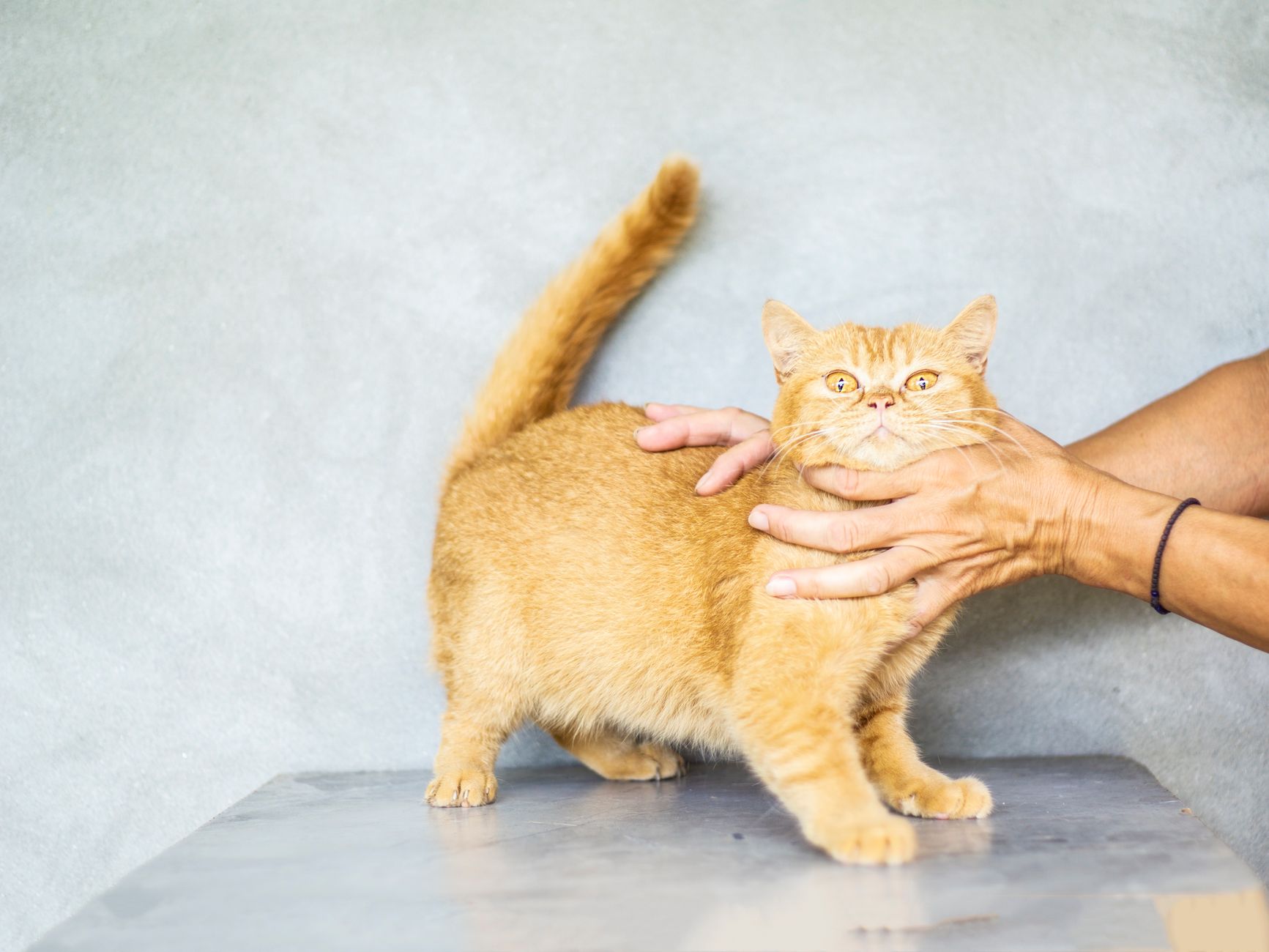
A cat who crouches low, extends the neck and makes a dry hacking sound is often assumed to be working up a hairball. If nothing comes up, that is usually a cough rather than a hairball, and coughing in cats is not normal. Feline asthma is a common cause and it responds far better to early attention than to waiting.
Why the hairball assumption is so hard to shake
The two look genuinely similar from across a room. Both involve a hunched posture, an extended neck, rhythmic effort and an unpleasant noise, and both tend to happen on the rug rather than the tiles. The difference is what follows.
A hairball episode ends with something on the floor. A cough does not. If your cat performs the whole routine several times a week and you almost never find anything afterward, that pattern deserves attention rather than a shrug and a paper towel.
There is a second reason this gets missed. Cats hide illness with unusual skill, and a cat who coughs twice a week at three in the morning in another room can go unnoticed for a year. By the time an owner brings it up, it has often been happening far longer than they realise.
Telling a cough from a hairball, and both from vomiting
A cough is a sharp, dry, forceful push of air out. The cat is usually low to the ground with elbows out and the neck stretched forward and slightly down. The abdomen does not do much. Nothing is produced, or occasionally a small amount of foam is swallowed again.
A hairball involves the same posture but with real abdominal effort behind it, a wetter sound, and it finishes with a tube of matted hair. Vomiting is similar in effort but produces food or bile rather than hair.
Film it. A cough on video is unmistakable to a veterinary team and removes all the guesswork, which matters because a cat almost never performs on demand in an examination room. Nothing else you bring to the appointment will be as useful.
What is happening inside the airways
Feline asthma is an allergic condition of the lower airways. The immune system overreacts to something inhaled, and three things follow: the muscle around the small airways tightens, the lining swells, and extra mucus is produced. Each of those narrows the tube that air has to pass through.
Cats find breathing out harder than breathing in when this happens, which is why an affected cat may show an abdominal push at the end of each breath. Over time, repeated inflammation can lead to lasting changes in the airways, which is the real argument for investigating early rather than watching for another season.
It is most often recognised in young and middle-aged cats, though it can appear at any age, and it affects indoor cats just as readily as those who go outside. The triggers are in the home.
Triggers in a West Side home
Household sources tend to be the ones owners can actually change:
- Dusty clay-based cat litter, particularly the type that clouds when poured
- Cigarette and cannabis smoke, including residue on clothing and furnishings
- Scented candles, plug-in fresheners, incense and aerosol sprays
- Perfume, hairspray, dry shampoo and cleaning products used in enclosed rooms
- Fireplace and wood stove smoke
- House dust and dust mites, especially in bedding and carpets
- Mould in damp bathrooms, basements and around window frames, which matters in a wet Vancouver winter
Outdoor air matters too, and Dunbar gets a specific seasonal version of this. Late summer wildfire smoke can push a previously stable cat into a flare, and so can high pollen days in spring. Our guide to wildfire smoke and pet safety in Dunbar covers how to reduce exposure on poor air quality days, and that advice is doubly relevant for a cat with known airway disease.
What else makes a cat cough
Coughing is a sign, not a diagnosis, and several conditions produce it. Lungworm and migrating intestinal parasites can cause airway inflammation that looks very much like asthma. Chronic bronchitis is a related but distinct condition. Infections, including some that vaccination protects against, can involve the airways, and our overview of common feline infectious diseases covers that group.
Heart disease in cats more often causes fast or laboured breathing than a true cough, but it must be separated from airway disease because the treatments differ substantially and one can worsen the other. Inhaled foreign material, airway masses and, in older cats, other chest disease all belong on the list.
This is precisely why a cough is worth investigating rather than treating on assumption. Getting the category right is the whole job.
How it is investigated
Assessment starts with a thorough physical examination and listening carefully to the chest, which happens during a full physical examination. Chest imaging is usually the key step, since airway disease produces recognisable patterns and imaging also helps rule out heart disease and other chest problems. Our radiology service handles that in house.
Bloodwork and a faecal examination for parasites are commonly included, since parasitic causes are treatable and easy to miss. Depending on findings, sampling the airways directly may be recommended to look at the cells involved and to check for infection. Our diagnostic services cover these steps, and the results are interpreted together rather than in isolation.
Living with it
Feline asthma is managed rather than cured, and most cats do well with a plan that combines treatment recommended by your veterinarian with meaningful changes to the air at home. Many cats are treated with inhaled treatment given through a feline spacer and mask, and most tolerate it far better than owners expect once it is introduced gradually.
The environmental half is where owners have the most leverage. Switching to a low-dust or dust-free litter, stopping smoking indoors, retiring scented candles and plug-ins, using a high quality air filter in the rooms your cat actually sleeps in, washing bedding frequently in hot water, and vacuuming with a sealed filter all reduce the load on the airways. Change one thing at a time so you can tell what helped.
Never adjust or stop recommended treatment because your cat seems well. Improvement usually means the plan is working, and stopping is the most common reason a stable cat flares. Ongoing monitoring belongs in a wellness plan with regular reassessment.
The emergency version
An asthma attack can become life threatening quickly, and cats deteriorate faster than most owners expect. Go straight to a veterinary hospital, calling ahead if you can, for any of the following:
- Open-mouth breathing or panting, which is close to always abnormal in a cat
- Breathing with the neck stretched out and the elbows held away from the body
- Gums or tongue that look blue, grey or very pale
- Obvious abdominal effort with each breath, or breathing that looks like hard work
- Collapse, weakness, or refusing to move
Handle the cat as little as possible, keep the carrier calm and quiet, and avoid restraining them for a closer look, since stress increases oxygen demand at exactly the wrong moment. This is what our urgent care service is for.
Cats also mask discomfort by withdrawing, so a cat who has become less visible around the house may be telling you something. Our article on what it means when your cat is hiding more is a useful companion read.
Frequently asked questions
Is my cat coughing, or bringing up a hairball?
The outcome tells you. A hairball episode ends with hair on the floor and involves clear abdominal effort. A cough is drier and sharper, produces nothing, and the abdomen stays relatively quiet. If your cat regularly goes through the motions and nothing appears, treat that as a cough and have it assessed.
Is it normal for cats to cough occasionally?
No. Unlike dogs, cats rarely cough without an underlying reason, so even an occasional cough is worth investigating. It is not something that improves with waiting, and airway inflammation that continues for months can cause lasting change. A few coughs a month still counts.
Can indoor cats get asthma?
Yes, and indoor cats are affected just as often. The common triggers are indoor ones: dusty litter, scented products, smoke, dust mites, mould and aerosols. Living indoors reduces some risks but not this one, which is why the environmental changes that help are almost all household changes.
Will my cat need treatment for life?
Many cats with asthma need ongoing management, though the amount can often be reduced once the condition is stable and the environment has been improved. Some cats need treatment only during flares. That decision is made by your veterinarian based on how your individual cat responds, and it should never be changed without advice.
Does wildfire smoke make feline asthma worse?
It can. Fine particles in smoke irritate already inflamed airways, and late summer smoke episodes are a recognised trigger for flares. On poor air quality days, keep your cat indoors with windows closed, run a good air filter in the room they use most, and watch closely for increased coughing or any change in breathing effort.
My cat only coughs at night. Should I still worry?
Yes. Night-time coughing is a common pattern rather than a reassuring one, and it often reflects the fact that the house is quiet and dust has settled and been disturbed. It also means episodes go unwitnessed for longer. Set your phone to record if you need to, and bring the video with you.